

Esselunga: sustainable packaging and informed consumers
Maria Costanza Candi

Operating in 8 regions and 39 provinces with over 190 stores, 131 Bar Atlantic locations and 50 EB beauty stores, the Group – whose history dates back to 1957, when the first supermarket in Italy opened its doors – is not only one of Italy’s leading retailers, but also a food company in its own right. Esselunga therefore brings a particularly broad perspective to the challenges surrounding packaging and sustainability, especially as they relate to private label. To explore this further, ItaliaImballaggio met with Fabio Fiorelli, Purchasing and R&D Packaging Manager within Esselunga’s Commercial Division, who shares the Group’s approach to sustainable packaging and its focus on shelf life.
Can you tell us about Esselunga’s vision, with particular regard to marketing and innovation in design and materials?
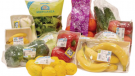
Esselunga places its customers’ needs at the centre of everything it does. In response to the demand for sustainability, we apply it across all areas of our business – including, of course, packaging. We started in 2019, well ahead of any regulatory requirements, making choices early on that allowed us to meet the 2025 deadlines two years in advance. At a strategic level, we decided to approach the issue scientifically, implementing software to manage packaging recyclability, with the aim of assessing recyclability against four indicators: CO₂ equivalent emissions, plastic content in the product, water consumption in production, and a circularity index that takes into account the actual recycling streams available nationally. For example, we have substituted materials, reduced thicknesses and increased the proportion of recycled content. This has allowed us to intervene in a targeted way on individual packaging items, maximising results in a short space of time, with one fundamental objective: not to reduce shelf life, so as not to increase food waste.
What impact do pack design and sustainability have on shaping consumer awareness?
The geopolitical situation has long been affecting consumers’ spending habits and sales volumes. When it comes to premium products, consumers factor sustainability into their purchasing decisions; for entry-level price points, value for money remains the primary driver. The retailer’s ability to communicate its values clearly becomes a key element in guiding the customer. It is therefore important to be able to convey the characteristics of the packaging accurately, making them recognisable to the customer and motivating them to spend more precisely because of these differentiating value-based attributes.
How significant a role does communication play in this process?
A brand must be able to convey the information linked to its environmental choices. In this respect, there has been a general improvement, with a marked raising of awareness among all players in the value chain – particularly post-Covid – moving away from the demonisation of plastic towards a more informed and scientific approach that takes into account the actual requirements of the product being packaged, as well as shelf-life and preservation needs. There is therefore no single packaging solution, but rather the most appropriate one for each specific function.
Are we moving back towards a polarisation between good and bad materials, or is the shift in environmental awareness and consciousness consolidating?
I often refer to the concept of perceived versus real sustainability, because at Esselunga the assessment of the most suitable packaging is grounded in scientific criteria. We therefore use different types of packaging interchangeably, according to the different product preservation requirements. The use of LCA methodologies for impact assessments gives us real data, and therefore solid arguments, to develop clear messages capable of guiding consumers in understanding the process, leading them towards better choices and, above all, more informed ones.
Let us turn to the PPWR, and in particular to the topic of reuse, which for the grocery sector could mean a revolution, unless common-sense solutions are found…
As Esselunga, we embrace the principles of the Regulation, which enshrine values we have supported for years. However, insufficient attention has so far been paid to the practical implementation of certain requirements that could have a considerable impact on companies such as ours – a food company that combines both the retail and production sides of the business. It is essential to have greater clarity on the actions required to define new strategies, as their in-store implementation is highly complex to manage. We will certainly be ready once the implementing decrees and EU delegated acts are in place to clarify outstanding points, and we will adapt accordingly, reaffirming the centrality of sustainability, product shelf life and consumer safety.