

Digital, sustainable and tailored: the new direction of trade fairs
NürnbergMesse Italia’s new Managing Director, Danny D’Alessandro: "Ready for the challenge"
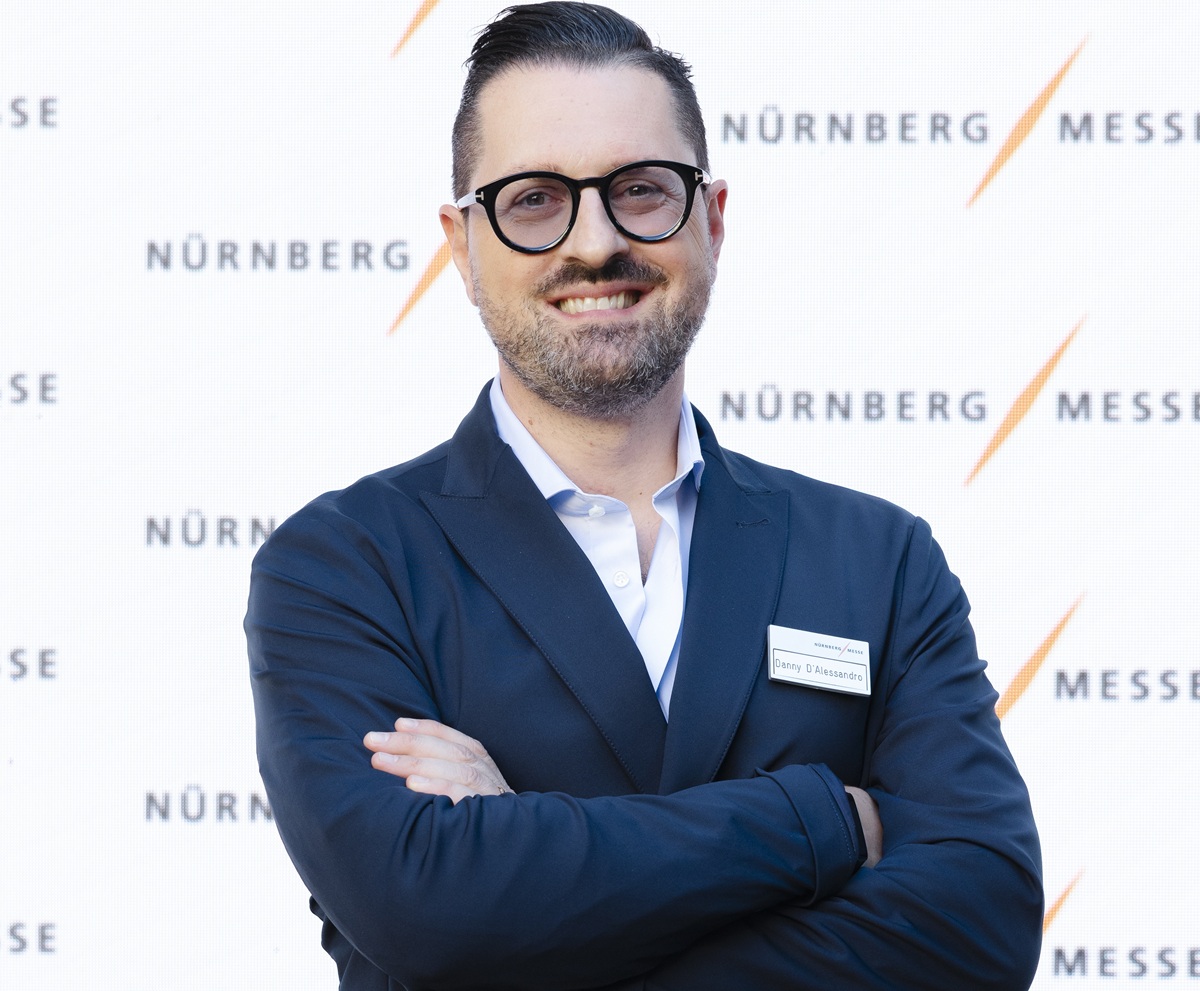
Davide Miserendino
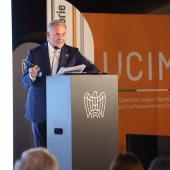
In the summer of 2025, he embarked on his new role at the helm of NürnbergMesse Italia, the successful Italian subsidiary of the major German exhibition group. From his very first statements, he made it clear that he brings a well-defined vision, a wealth of ideas, and a healthy determination to keep learning. We are talking about Danny D’Alessandro, 44, with a background in the fashion industry and firmly rooted in the world of trade fairs.
D’Alessandro, Italy is one of the most strongly represented countries at the Nuremberg trade fairs each year. How does your subsidiary work to engage an ever-growing number of exhibitors and visitors?
“It is true. In Nuremberg, the Italian contingent is consistently the largest represented group, both in terms of exhibitors and visitors. The 2023 figures show around 1,100 exhibitors and nearly 10,000 visitors. These numbers reflect a national economy that is particularly export-oriented: in 2024, Italy exported goods worth €626 billion out of a GDP of approximately €2.1 trillion, 32% of the total. Italy ranks sixth worldwide for exports, and Germany is the leading destination for our goods. It can therefore be said that our results are driven by two winning factors: the need to export and Germany’s role as our primary export market, as well as a key international marketplace. How does the Italian subsidiary position itself in this context? It plays a crucial role in raising awareness across the domestic market, both among exhibitors and visitors. We do everything within our remit to provide companies with commercial guidance and support, helping them gain a clearer understanding of the products available on the market”.
Thanks to trade fairs such as FACHPACK, drinktec and BrauBeviale, you enjoy a privileged vantage point over the packaging and bottling industries. Looking back at 2025, which has just drawn to a close, what are your expectations for the future?
“FACHPACK and drinktec are leading industry exhibitions – key meeting points where companies need to be present in order to be part of the sector and visible to the vast community of buyers. Within this exhibition landscape, I would highlight three unavoidable trends. Starting with FACHPACK: the first is undoubtedly sustainability in its broadest sense, encompassing both the use of recycled materials and a close focus on European packaging regulations. The second trend is digitalisation and, more specifically, smart labelling, which took centre stage in 2025 and is closely linked to the Internet of Things (IoT). The third key trend at FACHPACK is personalisation: in 2025 we saw companies significantly increase their ability to respond to small and even micro production runs – a rapidly growing development. Turning to drinktec, here too I would identify three core themes. The first relates to circularity – from water usage and reuse to the management of water losses. The second is ‘data to value’: leveraging data to generate tangible value. The third, and perhaps most compelling, concerns changing consumer purchasing habits. A significant part of the exhibition was dedicated to the non-alcoholic segment. It is often said that the narrative around wine, which proved highly effective in the 2000s, no longer resonates with today’s 20- to 30-year-olds. This is a topic of considerable interest, which we will also have the opportunity to explore this year at BrauBeviale. Within a highly technical, practical, and business-oriented environment, the exhibition will provide a privileged platform for observing trends in the beverage world, with a particular focus on Europe. An increasing number of breweries are expanding their portfolios to include soft drinks, RTDs, functional beverages, and low- or no-alcohol products, and consequently require new technologies. This shift is directly influencing the direction of BrauBeviale 2026, conceived as a cross-sector platform for the entire beverage industry”.
The world of trade fairs is undergoing profound change. Could you identify three characteristics that a modern trade fair must have?
“Studies on the subject and market research deliver an inescapable fact: buyers attend ‘buyer-driven’ exhibitions for three main reasons. First, to visit their suppliers; second, to learn about market trends; and third, to conduct scouting. Consequently, a modern exhibition must be designed around these purposes. Trade fairs are the most important strategic lever of industrial policy, particularly in countries such as Italy and Germany. They connect people – and thus exhibitors – with buyers, but above all they create a network. So, what makes a fair truly modern? Again, there are three key trends. The first is digitalisation. A few years ago, during Covid, it was thought that digital solutions might somehow replace physical attendance. This did not happen – and will not happen. However, we have seen just how important a well-designed matchmaking system can be, both before and after the fair. Equally useful is a digital tool that helps buyers navigate the exhibition effectively. The second trend is sustainability, encompassing everything from packaging to exhibition stands. The third aspect is the personalisation of the buyer experience: exhibition content, managed through a digital platform, can be explored and understood in advance”.
Your tenure at the helm of NürnbergMesse Italia began on 1 July 2025. What are the main projects you plan to pursue?
“I am still in a phase of study and learning, because I believe that before making any changes to the structures, it is essential to understand them thoroughly. This is a solid company with the ambition to continue growing, performing two main roles. The first is acting within the Italian market to promote the features of the Nuremberg trade fairs and, in essence, to attract exhibitors and visitors to these fairs in support of the Italian system. The second is that of a full-fledged trade fair organiser. In addition to our traditional role in Nuremberg’s exhibitions, we also operate independently as organisers of our own events, such as the Focus on PCB exhibition. There are other projects in the pipeline as well. This is an important aspect, as we increasingly aim to position ourselves as a platform serving companies – both to bring exhibitors and visitors to Nuremberg and to provide services within Italy through trade fairs that we organise ourselves.
Can you help us get to know you better: what experiences have you had so far, and what path brought you to NürnbergMesse Italia?
"After following a traditional path in law and earning a degree in jurisprudence, I began my career at a major fashion company in the Florence area, primarily focused on the production and trade of handbags. Within the company, I initially took on the role of legal advisor, and later became General Counsel. This experience was invaluable for understanding how a company operates and how trade works within Italy and internationally. I then moved on to become the General Manager of Assopellettieri, the national trade association that organises the world’s most important exhibition for handbags and fashion accessories, Mipel. It was an incredibly formative experience: I held this position for over nine years and, in addition to gaining specialised knowledge of the trade fair sector, I began to build a professional network. That experience allows me today to approach my role at the helm of NürnbergMesse Italia with enthusiasm, equipped with the tools and knowledge necessary to meet the challenges of the moment".