

PPWR Guidebook: EUROPEN's Guide for Businesses
Francesca Siciliano Stevens reflects on the tools available to navigate the evolving requirements of the Single Market
Always ready to support companies and stakeholders in understanding the relationship between European institutions and the packaging sector, EUROPEN has released a dedicated guide to the Packaging and Packaging Waste Regulation (PPWR). Following a lengthy approval process, the regulation is now awaiting the implementing decrees that will bring it into effect within a context where Member States continue to seek the right balance between sustainability and competitiveness. These two concepts are increasingly central to the debate on the future of the Single Market.
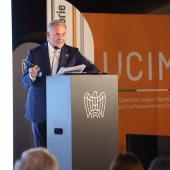
ItaliaImballaggio spoke with Francesca Siciliano Stevens, Secretary General of EUROPEN, to review this important tool – one of the many that the association has developed to help companies and professionals navigate the intricacies of the new regulatory framework.

PPWR has been a much discussed topic over the past year. What prompted EUROPEN to develop this new tool?
“The guide offers companies a glossary, the full regulatory text, a summary of the PPWR, cross-references to other European legislation, and a fundamental tool: an interactive questionnaire designed to help companies assess their compliance with the new regulation,” explains Francesca Siciliano Stevens. “We created this guide to help companies better understand the PPWR.”
A tool that makes life easier for companies by taking them beyond free interpretation....
“That’s our goal. By entering key information, such as the characteristics of the business, position occupied within the packaging value chain and type of product, the guide generates a checklist of the requirements needed to fully comply with the PPWR, highlighting any missing elements,” continues Stevens. “The application is undeniably complex, and companies are often scrambling to gather information without fully understanding the implications of implementing the regulation. That’s why, following the survival guide, we aimed to offer more comprehensive orientation tools, developing a customised resource that clearly defines the regulatory obligations and proposes appropriate solutions, tailored to the specific needs of each business.”
Since we are talking about specific markets, let's consider the pharmaceutical industry, which is under pressure from stringent regulations and compliance demands. Based on the analyses carried out to develop the guide, what do you see as the future of packaging in this industry?
“Sustainability goals now affect all industries, none excluded,” says Stevens. “For the pharmaceutical industry, the PPWR has brought a clear awareness that it, too, must contribute to the circular economy. The regulation includes exemptions from certain obligations that could jeopardise the safety of medicines or medical devices, such as the use of recycled plastic in contact-sensitive packaging. However, it does not exempt this industry from requirements related to packaging recyclability.”
Are there any signs of a shift in the Commission's approach to sustainability?
“It’s unfortunate that the debate has become polarised between sustainability and competitiveness, causing damage that will be difficult to repair. The Draghi report speaks of either a slow decline or a radical change of direction. While we haven't yet reached this second stage, we are beginning to see signs that ideological environmentalism is giving way to a sustainability that also embraces the social and economic dimensions integral to it. We are, therefore, entering a second stage with a more positive outlook, though structural changes are still needed in Europe’s industrial and infrastructure policies. Think of strategic issues such as energy, infrastructure, and international trade; these all require a structured and unified policy driven by a focus on competitiveness. If we look at the crisis affecting the automotive or chemical industries, for example, we’re witnessing, first and foremost, the loss of thousands of jobs and a decline in the competitiveness of industries where Europe has long held a global leadership position. This calls for a rapid shift in industrial policies and a strengthening of the Single Market.”
The new PPWR Guidebook video is now online on EUROPEN’S YouTube channel
The complete guide is online on EUROPEAN'S web site.