

A project that never stops: Laminati Cavanna Talk at the Senate
The volume dedicated to Stefano Lavorini, published by ItaliaImballaggio, becomes an occasion for dialogue between the packaging supply chain and the institutions
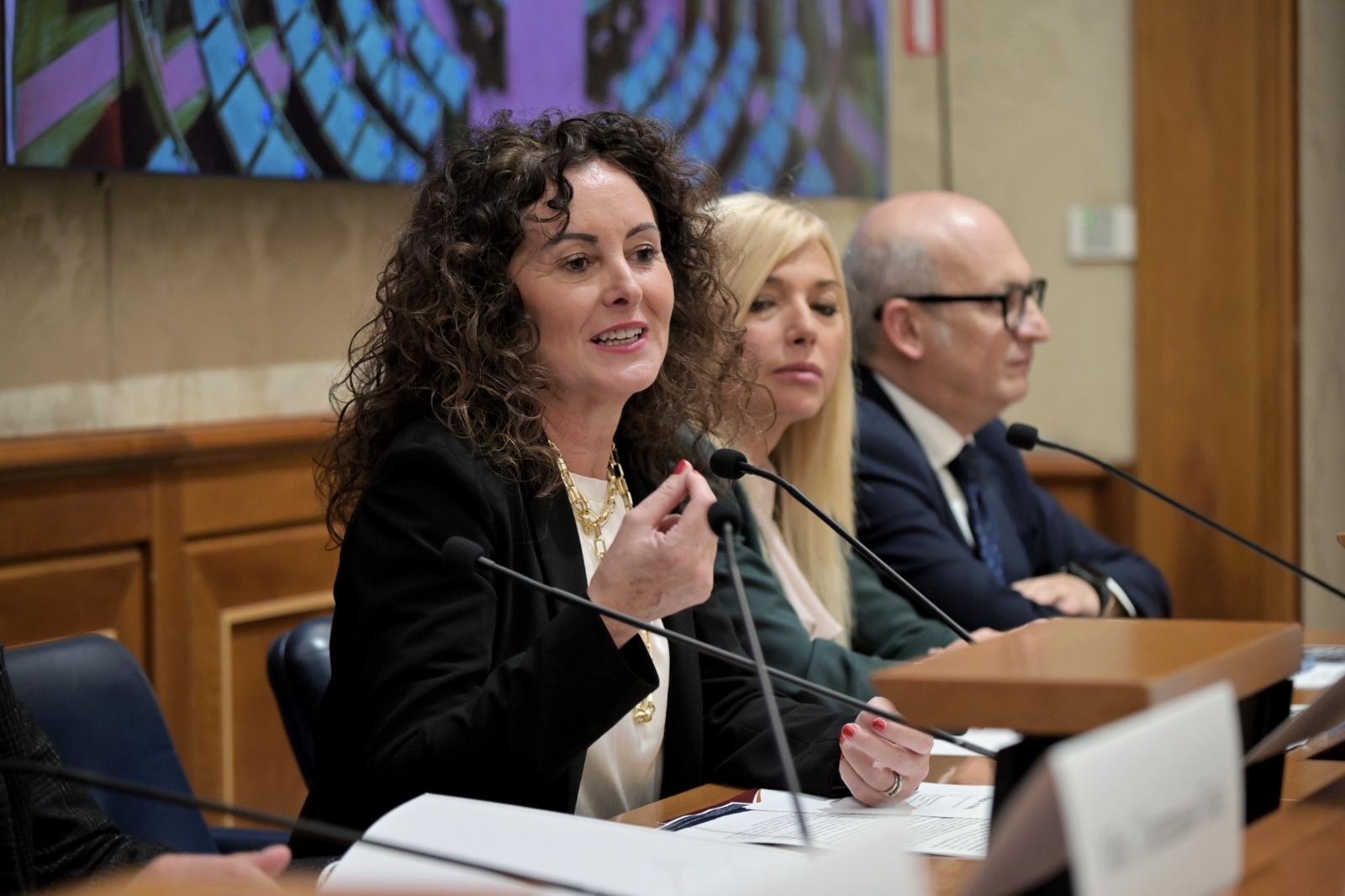
Maria Costanza Candi
Witnessing a project evolve coherently across different contexts and platforms is far from common. This was precisely the case with Laminati Cavanna Talk, an innovative communication initiative conceived by Anna Paola Cavanna to make the participation at Ipack-Ima 2025 truly distinctive. Trade fair presence is always a challenge for businesses, requiring the most compelling synthesis of their operations to capture the attention of an audience immersed in solutions, technology, and innovation.
To transcend the fleeting nature of a trade fair and give the event a lasting, unique resonance, Chairwoman Anna Paola Cavanna devised a series of interviews recorded during the exhibition and made available on YouTube. What might have remained confined to the boundaries of Ipack-Ima instead became a supply chain narrative, first extended to the company’s Academy and then projected outward towards new institutional channels: the Senate.
Bringing this journey to life and giving substance to what could have been a nearly instructional account of the supply chain protagonists are ItaliaImballaggio and Kairos Media Group, who, in collaboration with Intono Comunicazione, edited the volume entitled “Laminati Cavanna Talk: interviste in fiera” (Laminati Cavanna Talk: Interviews from the Trade Fair). The valuable digital content generated by the interviews has thus been transformed into an informative and educational tool dedicated to packaging and its key players across the entire value chain.
A bridge between industry and political processes
The protagonist of the event was the packaging supply chain, which, following institutional greetings from Senator Costanzo Della Porta, the initiative’s promoter, was at the heart of the 26 November event attended by the Minister for European Affairs, Tommaso Foti. It was the Minister himself who noted that the volume provides an engaging overview of the sector, written with the system as a whole in mind rather than focusing solely on individual companies. He commented: “I’ll reveal a secret: I have read the book. Far from being boring, it offers a lively panorama, describing the world of packaging in all its facets, without losing sight of a commendable supply chain spirit where no sector dominates over another”.
Joining Minister Foti were several political figures who had already participated in the talks and play an essential role in building collaborative pathways between institutions and businesses. Among them was Senator Elena Murelli, who emphasised the need to “Defend Italian companies in collaboration with trade associations”, echoed by Deputy Daniela Dondi, who highlighted the value of the Emilia Packaging Valley for “exploring a product of high quality and innovation, offering specialised employment, generating resources, and exporting expertise”.
Tullio Patassini, head of the Secretariat to the Chair of the Chamber of Deputies’ Commission on Productive Activities, addressed the European Union’s policy decisions, discussing the PPWR. He described it as “a measure with right objectives, such as waste reduction, but operationally unfeasible. It could be improved by exporting Italy’s national recovery and recycling model, where packaging is an area of excellence”.
Voices from the sector
Among the interviewees was Alberto Palaveri, President of Giflex, who emphasised the importance of creating networks between companies to maintain a constant dialogue with the political and institutional world, highlighting how packaging is made up of “pioneers of sustainability – driven by market demand and a growing public awareness – which has become one of the defining factors of Made in Italy”.
The floor then passed to the businesses, starting with Andrea Dallavalle, President of ATIF, who stressed the importance of trade associations and Made in Italy, noting that “the most strategic innovations for the sector lie in the Italian ability to combine tradition and technology, craftsmanship and innovation, deploying flexibility and adaptability”. These themes were echoed by Simone Castelli, CEO of Ipack-Ima, the flagship event for the packaging sector, who added that “it is essential to operate as a system and work together to meet competition from low-cost Asian producers, whose quality continues to improve”.
Industry perspectives were further represented by Andrea Formigoni of Dec Impianti, sponsor of the volume and the event, who highlighted that “Italian technology, recognised worldwide as an area of excellence, requires greater promotion of specialised segments, with particular focus on the lesser-known segments”. According to Formigoni, this is why dialogue with institutions becomes strategic, especially for companies like Dec Impianti, which export to 50 countries.
An editorial project that lasts over time
Davide Miserendino, Editor-in-chief of ItaliaImballaggio, emphasised the centrality of the Italian approach to sustainability and packaging, reinforcing the idea that “the sector must increasingly communicate through high-quality initiatives that span contexts, media, and professional environments, as exemplified by the ‘Talks’, which gave rise to the book at the centre of this presentation. A volume that describes a supply chain capable of influencing the debated decisions initially focused on the PPWR, demonstrating that ignoring the Italian way is a mistake, precisely because of the expertise expressed within the sector and its extensions, such as recycling”.
Finally, attention turned to the undisputed protagonist: a person capable of building networks that have further strengthened an already vibrant ecosystem, thanks to the sector’s sensitivity to the associative dimension of doing business, always placing innovation and the ethical component of packaging at the centre. This is precisely one of the key points of the white paper delivered by Anna Paola Cavanna to institutional representatives. It “aims to inform policymakers about a sector that shows great attention to sustainability with continuously updated innovative solutions, designed to reduce food waste and restore the true meaning of sustainability, which, beyond environmental concerns, must also consider economic and social factors”.