

GranTerre & Klöckner Pentaplast (kp) | Best Packaging 2026
Product overview. A thermo-sealed high-barrier mono-material PET tray containing 50% post-consumer recycled plastic, partly sourced from recovered trays. Designed for high-quality sliced cured meats, it combines performance and recyclability, anticipating European Design for Recycling criteria and PPWR 2030 targets.
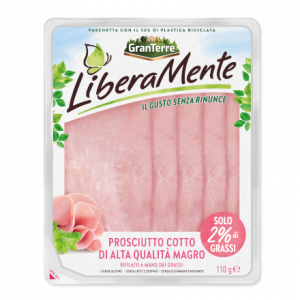
Innovation. The barrier is co-extruded directly into the PET, representing only 3% of the tray’s total weight, with no adhesives used. The structure integrates 50% recycled PET, including 15% recovered from trays via kp Tray2Tray® technology. The result is a mono-material tray fully compatible with existing recycling streams.
Materials used. 250-micron mono-material PET tray containing 50% post-consumer recycled PET, delivering performance equivalent to traditional multilayer structures. The top film is polyolefin-based, with a density below 1 g/cm³, and easily separable to support correct tray recycling.
Technologies. The bottom film is produced via co-extrusion of PET with a recycling-compatible barrier additive. Packaging is carried out using Form, Fill and Seal technology. The tray is thermoformed, filled, vacuum-packed under protective atmosphere, then sealed with the top film.
Environmental benefits. This solution replaces multilayer structures with a mono-material PET tray, improving recyclability. The use of 50% recycled PET, including a share from post-consumer trays via kp Tray2Tray® technology, contributes to developing a genuinely circular supply chain for food packaging.
Benefits for end users. The tray is lightweight yet sturdy, with ribs ensuring rigidity and product protection. On-pack disposal instructions help consumers correctly separate packaging components and actively participate in the recycling process.
Communication advantages. The packaging communicates material circularity, showing how collected and recycled trays can be transformed into new food packaging. A dedicated circularity logo is under development, along with the integration of QR codes to provide further information on sustainability and recyclability.
This article appears in the Special: