

Regenerative beauty
At Davines Group, sustainability is not an add-on strategy or a mere aesthetic exercise, but a cultural legacy rooted in the company’s family history. A multi-generational commitment to waste reduction has evolved into a sophisticated approach where ethics, beauty and environmental responsibility move in lockstep. This philosophy also shapes the company’s vision of packaging, which it views not simply as a container but as a means for connecting with consumers, a tool that expresses transparency, circularity and the pursuit of aesthetic appeal through essentiality.
In the following interview, Stefania Bollati (Head of Wellbeing and a member of the board of directors) discusses the company’s philosophy and explains how its packaging choices reflect a mindset that rejects excess, favours clarity and aims to have a positive impact across the entire supply chain. Her account explores scientific innovation, social responsibility and a deep respect for nature, focusing in particular on the role of packaging as an integral part of a regenerative vision of the future.

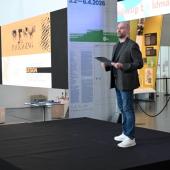
head of Wellbeing and
member of the board of
directors
You often talk about roots and founding values. To what extent do these aspects influence Davines Group’s approach to sustainability today?
They have an enormous impact. In our family we were brought up with one simple rule: avoid waste. Long before it became a principle of sustainability, it was considered a moral duty. My mother comes from a farming family, and the idea that nature is generous but not infinite has always been present. That early imprint became an unspoken agreement between us as a family: to look after each other through our work. It is an agreement that naturally extends to everyone we come into contact with. This is why we are now a stakeholder-driven company: we follow the science, we work on concrete projects and we strive not only to reduce our negative impact but also to maximise our positive contribution.
What does the concept of “ethical profit” mean for Davines Group?
Our corporate statements puts it very clearly: “to do our best for the world, through beauty, ethics and sustainability”. Pursuing ethical profit means generating wellbeing for all stakeholders. Twenty years ago, we created our first Ethics Charter, not as a top-down mandate but as a bottom-up collaboration with our employees to serve as a practical guide for day-to-day decisions. This is an ongoing commitment to doing what is right, a journey of growth with no final destination, because, although perfection does not exist, we can at least get closer.
In the same way, we encourage our suppliers to become reliable partners. To do this, we assess them through the EcoVadi platform, which analyses their capacity to be first sustainable and, ultimately, regenerative. In practice, the platform assigns a score that helps us choose partners who are truly aligned with our values. We are very proud to have successfully onboarded a large number of suppliers and customers into the B Corp process. Many companies visit us and ask for support in undertaking this journey. We show them that there is a real benefit – not only reputational but also ethical – in becoming more sustainable.
How important is collaboration between companies in promoting a more sustainable economy?
We feel a moral obligation to contribute to a civically-minded economy, a model that puts people front and centre. Our first rule is to build networks, because alone you can go faster, but together you can go further.
With this in mind, in January 2022 the Group joined forces with another 26 B Corporation-certified companies to found the B Corp Beauty Coalition, an alliance created to improve social and environmental practices in the beauty industry and raise public awareness of the link between beauty and responsibility. By the end of 2024, the coalition counted more than 90 members. Its aim is to change the cosmetic chemicals industry’s business model through the sharing of knowledge and scientific research. Rather than keeping our know-how to ourselves, we want it to benefit the entire supply chain and help reduce its environmental footprint.

How is this vision expressed through the packaging you use?
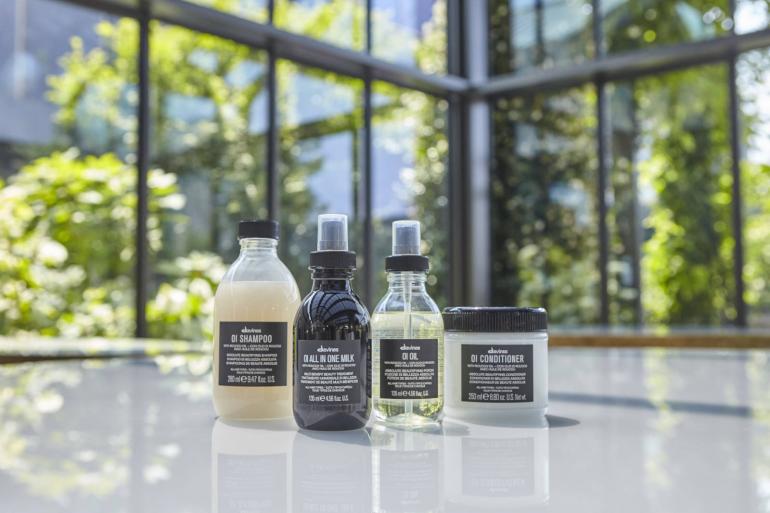
Packaging is one of the areas where we have been applying our philosophy for the longest time. In 2011, we drew up a Packaging Research Charter which still guides us today in developing packaging based on eco-design principles. This approach is vital to our goal of reducing virgin fossil-based plastic in our packaging (primary, secondary and tertiary) to less than 10% by 2030. Wherever possible, we adopt refillable solutions and strive constantly to strip away anything superfluous in terms of both weight and design. We believe that packaging must be beautiful, but this must be an ethical beauty: transparent, sincere and always functional.
Your packaging is highly minimalist and often transparent. Is this a deliberate choice?
Absolutely. Transparency is a metaphor for who we are: we like consumers to be able to see the product, its colours and its texture. Packaging is also a powerful tool for communication, and in many cases is more widely read than a website or a book. That’s why we choose clean materials, light graphics and illustrations that evoke nature and wellbeing (many of our customers recognise products through visual cues), while also incorporating messages of inclusivity and care. In essence, every element must convey a message that fully reflects who we are.
Can your packaging be described as “regenerative”?
Perhaps not fully regenerative, but certainly circular. We have more than 360 products with a Life Cycle Assessment. We focus on lightweighting, refills, recycling, mono-materials and logistics optimisation to reduce carbon emissions. In 2024, we won the Conai “Best Packaging” award for a reusable glass container with a refill system from our Hydra Memory line. In parallel, we support the collection of a quantity of plastic waste equivalent to our packaging through international associations operating in countries where waste management is most critical.
You are present in 90 countries. Does your packaging change according to the market?
No. Our packaging is the same everywhere and is consistent with our values. We don’t chase after fashions or local aesthetic standards. The less-is-more principle applies worldwide: reduce secondary packaging, avoid unnecessary embellishments and focus on clean, pared-back design. We are also working on refill solutions for glass, so that a single container can be used for the entire usage cycle.

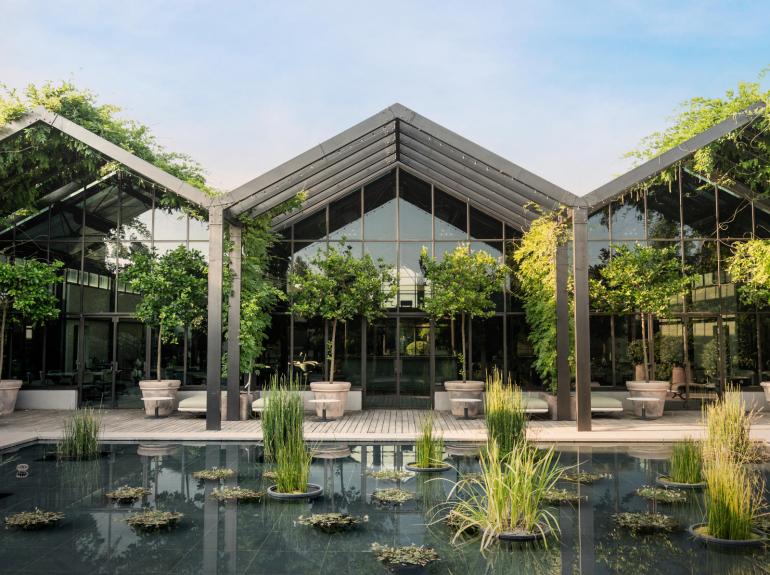
Parma's headquarter
How does your scientific research support your packaging?
We have 60 scientists in our in-house research and innovation laboratories, some dedicated exclusively to packaging. We are constantly exploring innovative alternatives to fossil-based materials, while ensuring compliance with cosmetics regulations.
Performance is also a key factor: cosmetics packaging isn’t just a container, it affects product efficacy, the preservation of ingredients and the customer’s sensory experience. Every design and material choice involves a balance between sustainability, functionality and beauty.

Parma's headquarter
Packaging is part of a broader strategy. What are your other priorities?
Our environmental sustainability strategy for 2030 is built around four pillars that guide every decision we make, all based on the principle of decoupling our growth from our environmental impact. The first is decarbonisation, which is perhaps the most complex challenge because it means achieving growth while reducing CO₂ emissions. This is a real balancing act that requires continuous investment and innovation. In this process, we use geothermal energy and photovoltaics.
The second pillar is circularity, an area in which packaging plays a central role, prompting us to rethink materials, processes and usage models.
The third is the protection of biodiversity, which we pursue through collaboration on projects such as the EROC (European Regenerative Organic Centre) in Parma, in partnership with the Rodale Institute.
Finally, we pay close attention to water conservation, adopting recovery and reuse systems and developing increasingly efficient facilities, for example using steam instead of water for cleaning. Together, these four elements define our path towards a healthier and more environmentally respectful future.
Your minimalism contrasts with the often ostentatious luxury of premium cosmetics. Is this an intentionally unconventional choice?
Yes, but we see it as a different kind of luxury. It isn’t the luxury of embellishment, but the luxury of essentiality and consistency. It is the content that is the true hero; the packaging should complement it, not overshadow it. The market recognises this approach: since becoming a B Corp, both our brand appreciation and economic value have grown.

How will digital technologies and artificial intelligence change cosmetic products?
Ours is a deeply empathetic profession built on relationships. AI can help with personalisation, but it must not replace human expertise. We have experimented with tailor-made solutions such as hair mask systems customised in-salon, but we always keep the professional front and centre. We believe technology should be a tool to enhance creativity and experience – supporting more precise diagnoses, suggesting personalised combinations and optimising processes – but without ever replacing the intuition and sensitivity that a human expert brings to their work. In this respect, AI and professionalism coexist as partners: technology expands possibilities, but it is the human touch that transforms those possibilities into real value for the customer.
What future do you envision for Davines Group in terms of packaging?
The same direction we are headed in today: minimalism, transparency, refillability, recyclability and essential beauty. Packaging that speaks, but with simplicity; that has little impact on the planet but a big impact on the quality of the experience.
For us, packaging is an integral part of our regenerative commitment to people and the environment, because every choice we make in terms of design, materials and production processes has a very real impact. Packaging is a bridge between sustainability and sensory experience, a tangible way to make our philosophy visible and to involve our customers in a shared journey of respect and care for the world around us.
And regarding your economic growth?
We expect to close this year with further growth, although we are watching the international situation closely. Currently, our primary market is the United States, but looking ahead we are turning our attention to South America while also aiming to strengthen our presence in Asia. At the beginning of January, we will also open our Spanish branch in Bilbao. Despite external challenges, we will continue to strive to do our best and grow. We are a solid family business with no interest in opening up to external capital, an approach that allows us to maintain stability and autonomy in our strategic decisions.