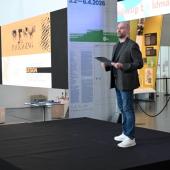


Packaging dialogues: what is the future of trade fairs?
What is the future of trade fairs? A conversation with Gian Paolo Crasta, Solly Cohen and Mattia Antognoni
Davide Miserendino
What does a trade fair reveal about the country that hosts it? How does it help us understand how society is changing—how interactions change, how expectations change? In short, what does it tell us about ourselves? We chose to start here—with people—to launch a special section of ItaliaImballaggio dedicated to the magazine’s founder, Stefano Lavorini, who passed away a year ago on 25 April. A journalist, entrepreneur and a point of reference for the entire packaging community, Stefano always put the human element first, leaving us pages rich with reflections and prompts to grow and improve. We want to pay tribute to his approach through a series of “Dialogues”: open, frank—and when needed, light-hearted—conversations on the themes that shape our rich and diverse supply chain.
We begin today with a discussion on a topic that, in different ways, involves all of us: trade fairs. As I write, many people are about to close their suitcases before boarding a flight to Düsseldorf, Interpack-bound—one of the most important and demanding trips of the three-year cycle. It raises a question: is it still worth it? Is the trade fair still such a powerful lever for business? The answer—spoiler alert—is simple: yes.
We discussed it with Gian Paolo Crasta, Director of Ucima and Acimac and Secretary General of Federmacchine; Solly Cohen, for years CEO of Fiera Milano International (a joint venture between RX and Fiera Milano) and previously a senior figure at the historic trade publisher Freeman/Reed Business Information in Europe; and Mattia Antognoni, born in 1993, with more than ten years’ experience in international trade fairs and congresses at Fiera Milano and Allianz MiCo, plus two years on the sales team at Ipack-Ima. Three generations in conversation—an intersection worth exploring.
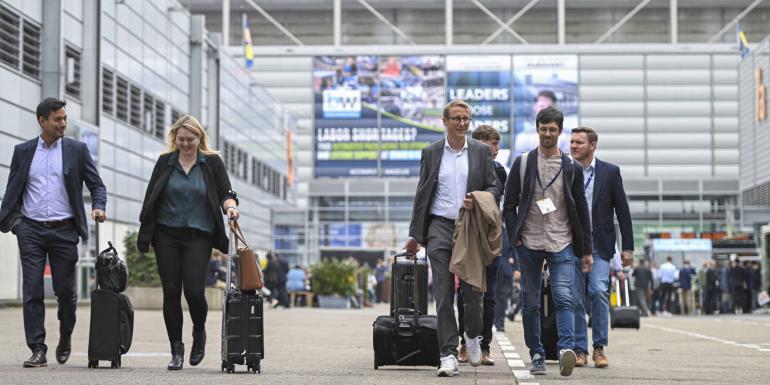
CRASTA: Dr Cohen, you are one of the founding fathers of Italy’s services industry. I had the pleasure of working with you on Ipack-Ima during the joint-venture years with Fiera Milano, and it was you who pushed for the creation of a real event business plan. It was intense work that helped us redefine the fair’s vision and mission—effects that are still tangible today. Looking back on my path, I can say that about twenty years ago the trade fair was the only real visibility opportunity to present products to the market, yet it was often prepared with little care: many aspects we now consider central were neglected.
COHEN: I can confirm that. For many years, up to 2000, I led Fiera Milano International, which on its own organized almost 800,000 square meters out of the roughly 1.4 million total at Fiera Milano at the time. The business model was based exclusively on square meters. Visitors mattered, but the event was often a copy-and-paste of previous editions: some companies would change position to improve visibility, but the model remained static. There was no talk of matchmaking, structured meetings between buyers and exhibitors, and little data was exchanged. Communication was mostly institutional. Later, when I became a consultant, I started working on trade fairs as enablers of business and knowledge: adapting to industry trends gained value, as did pre-fair preparation—with presentations in Italy and abroad—technology use, and data analysis for predictive activities. Is that a model Mattia recognizes?
ANTOGNONI: Yes. I entered the trade-fair world in 2012, at a time when content creation was starting to gain more and more space within events. It was a period when companies seemed to be losing confidence in the fair’s power; now, however, it feels like the trend is reversing. Of course, it’s no longer like the 1990s, when you brought machines to the show and closed deals directly at the booth. Back then, companies mainly expected to collect contacts and sell. Today the objective is different: the focus is on qualifying leads that are often already in-house. Companies use the fair to move a negotiation one step forward—not only to identify new contacts.
COHEN: Today, keeping the community engaged “non-stop” is increasingly decisive. Take Ipack-Ima: the fair is held every three years, but Ucima—partner and co-organizer of the event—is active every day. To keep the community engaged year-round, technology is a crucial support. I would also underline the hybridization that is emerging—and that major Anglo-Saxon groups are developing—between trade fair, congress and festival, with an increasingly strong “animation” component. The global organizer Informa, for instance, created a dedicated division after acquiring the Cannes Lions International Festival of Creativity, showing it understood that this proactive model can be applied in many contexts.
CRASTA: It’s clear that today organizers need to position themselves not only as sellers of square meters, but as sellers of experiences. But I wonder: is it right to fill event days with content? Or is it more about the organizer’s visibility—risking to distract the buyer?
COHEN: The organization must be driven by buyers’ needs. An overloaded calendar is dispersive in terms of time and resources. Often events are poorly attended, which frustrates those who spent time and resources organizing them and those speaking on stage. If they were too crowded, however, they would take excessive attention away from the exhibition area. The solution? One major conference-style event per day, then leave dedicated spaces to companies, so they can rotate their own presentations.
ANTOGNONI: I’ll answer by citing an initiative introduced at Ipack-Ima in 2025: the Smart Factory. Several companies collaborated to build and show visitors real production lines. It’s not a festival—yet—but it is a way to make a machinery fair more experiential. An initiative like this has certainly encouraged partnerships among exhibitors, which is a concrete value: I believe that’s the right perspective. As for keeping exhibitors engaged in the years between editions, it’s far from a given. There are all-consuming moments, like Interpack, when it makes no sense to push companies that are completely focused elsewhere. Timing becomes decisive: when should they be involved? Is the trade-fair calendar favorable? What geopolitical developments are underway? It’s a question we cannot avoid in a sector like ours, strongly oriented toward exports.
COHEN: On the importance of keeping exhibitors engaged, I’d also mention the Salone del Mobile. As we all know, the Fuorisalone has become increasingly important over the years—so much so that many buyers, especially international ones, go to the fair in the morning and to Fuorisalone events in the afternoon. For years the Salone was not involved in Fuorisalone, but it has now understood its importance and started organizing events in the city as well—especially in light of the fact that some major companies would no longer take part in the showgrounds edition. The Salone is reacting, too!
CRASTA: Are companies preparing for trade fairs more carefully today, or is it still the usual refrain—“Nobody came to the booth, it’s the organizer’s fault”?
ANTOGNONI: I’d say it’s a mix. We’re in a phase of generational change in middle management. This has two effects: on the one hand, fewer and fewer people have firsthand experience of the years when trade fairs were the main sales tool; on the other, there’s a new, non-linear approach that can still produce surprises. Today I see companies that arrive with no preparation at all, and others that do huge work on content and marketing but neglect the commercial side—ending up with a low return on investment. Balance is key.
COHEN: I absolutely agree: preparation is essential. A few years ago I was asked to help some exhibitors prepare for a trade fair. It’s a service that isn’t always offered, but it would be very appreciated. In Italy, it should be structured systematically: it makes no sense to complain if you don’t prepare properly for your participation.
CRASTA: What are the main things to do before taking part in a trade fair?
ANTOGNONI: Definitely “warm up” all your leads. That’s the foundation. Today every company has a database: the days of salespeople with a secret little address book are over. You have to work your CRM. At a fair last year, I compared notes with two companies: one told me, “I only saw existing customers”; the other said, “I saw existing customers and with one I closed the biggest contract in our history.” Two opposite outcomes, symptomatic of two different approaches: most likely one of the companies did solid pre-event work and arrived prepared.
COHEN: The way the booth is conceived is crucial, too. It must not feel unwelcoming: I’m thinking of booths with controlled entrances and a single access point. Buyers are not afraid to introduce themselves, but they need to feel welcome. The seniority of the people engaging with leads matters a lot as well. At German fairs everyone is in uniform, with a name badge: professionalism is immediately apparent.
CRASTA: Speaking of German fairs: what have we learned from them, and what have they learned from us—in this endless challenge?
COHEN: Let me start by noting that many German fairs have not come back as strong as before after Covid. That creates a major opportunity for Italy and France to challenge German fairs on their own turf. Data show Italy has recovered to pre-Covid levels, Spain is even at +20%, while Germany is still about 20% below. We learned preparation from them; they learned from us how to be more flexible and change course. ANTOGNONI: I’ve noticed above all a shift in German fairs’ communication and marketing. In the past a showcase website was enough; today—also because of the incomplete post-Covid recovery—events are investing in higher-quality communication. From us, Germans are learning a more human approach: in the past, hall space was assigned almost without interaction; today there’s discussion about placement and even about the possibility of getting more square meters—questions that wouldn’t have been asked before.
CRASTA: German flagships are slowing down and competitors are growing. Could this be due to the regionalization of trade fairs and fewer long-distance trips? In other words, are global fairs destined to disappear?
COHEN: If we’re talking about truly significant trade fairs, only a few events per sector will survive—probably one per continent. The same applies to exhibition venues: studies point to ten or twelve global hubs. In Italy there will be one, maybe two; in France one; and so on. In Germany the recovery is slow both because of broader country-level difficulties and because, to contain costs, companies send fewer visitors and for fewer days. Between hotels and restaurants, participating becomes very expensive.
CRASTA: To close: does the trade fair need to remain physical? Is it better to display products or to tell their story on screens?
COHEN: It must remain physical. Today you may bring a selected part of the product range, but post-Covid data show that the physical trade fair—which seemed destined to disappear—has rebounded strongly. There has been a major restart in the United States as well.
ANTOGNONI: I agree. The central element is people—unless we find ourselves in emergency situations. As for Germany, Interpack is certainly perceived as the benchmark fair, but I feel a shift is underway. And I believe that, after its latest edition, Ipack-Ima can aim to play an increasingly important role.
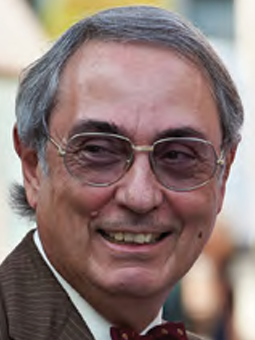
Solly Cohen
From 1974 to 1994, he served as President and Chief Executive Officer of the Masson Medical Publishing Group for Italy and Southern Europe, and from 1988 to 1994 as President and Chief Executive Officer of Editoriale PEG. From 1994 to 2000, he was President and Chief Executive Officer of Blenheim Italia; from 1996 to 2000, Vice President with responsibility for Publishing at Miller Freeman Europe; and from 1994 to 2000, Chief Executive Officer of Fiera Milano International.
In the trade fair sector in particular, he provides strategic consulting and develops negotiations aimed at business growth for major Italian and international exhibition venues and organizers such as Fiera Milano, Italian Exhibition Group, and RX Italy.
He is Past President of ANES (President from its founding until 2002) and Past President of the Medical Eurotop Association. He has served as a member of the Executive Committee of Assolombarda and of Confindustria’s Council of Presidents.
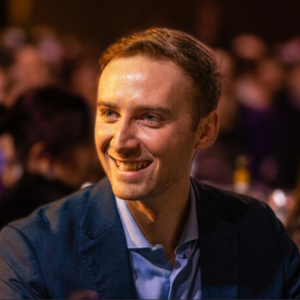
Mattia Antognoni
Since 2013, he has worked in the international events and trade fair sector, based in Milan, building a career spanning operations, hospitality, and business development. He started as a Senior Event Coordinator (2013–2016) and then took on the role of Operations Project Manager (2016–2020), leading the design and delivery of hospitality services for international trade fairs and congresses at Fiera Milano, Allianz MiCo, and the Autodromo Nazionale di Monza.
Subsequently (2020–2024), he expanded his skills in Business Development and Marketing, contributing to brand growth and positioning through commercial development and communication projects. Since 2024, he has been Sales & Business Operations Account at IPACK-IMA, where he is responsible for business development, managing international clients, and optimizing the exhibitor experience for one of the leading international trade fairs in the sector.
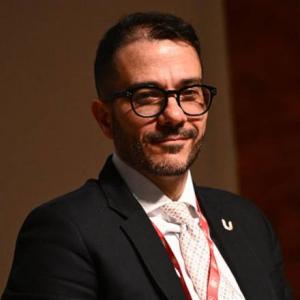
Gian Paolo Crasta
Before his appointment as General Director, he served for 10 years as Head of Marketing & Communication at Ucima and Acimac. In this role, he strengthened the international presence of the Associations and their member companies, supporting participation in the leading industry trade fairs and fostering the growing reputation of Italy’s packaging and ceramics industries worldwide. He is Chief Executive Officer of Acimac’s and Ucima’s service companies: Sala Srl and PromaPack Srl, and of Kairos Media Group Srl (the Italy-based publishing house that produces the leading Italian magazines for the packaging and ceramics industries). He is also a member of the Board of Directors of Intono, a communications company primarily focused on the B2B sector, and President of Hype Farm Srl (a digital agency based in Modena). Since 2023, he has held the position of Vice President of Anes. Since late 2025, he has been Secretary General of Federmacchine.